 Instrumentiverse

Introduction to Scales and Arpeggios in Piano Playing
After mastering basic chords, the next essential step for any aspiring pianist is learning scales and arpeggios. This 2026 piano tutorial provides a structured approach to major and minor scales along with arpeggios, helping beginners build solid technique and deeper musicality. Scales train finger strength, independence, and evenness while arpeggios develop reach and fluidity across octaves. Together they form the backbone of sight-reading, improvisation, and expressive playing across classical, jazz, pop, and contemporary styles.
Many beginners focus solely on chords for quick song learning, but this limits long-term growth. Scales introduce the building blocks of melody and harmony, allowing players to understand why certain notes sound good together. By the end of this guide you will have clear fingerings, daily routines, and strategies to avoid physical tension that can hinder progress.
Why Scales and Arpeggios Matter After Chords
Chord-based songs deliver instant satisfaction, yet they rarely challenge finger dexterity or hand coordination at a deep level. Scales address these gaps by requiring precise sequential movement and controlled timing. Arpeggios further extend this by breaking chords into flowing patterns that mirror real musical passages. For example, the melody in many pop ballads draws directly from scale degrees, while arpeggiated accompaniments appear in classical sonatas and modern film scores. Practicing these elements improves ear training because players learn to recognize intervals and chord qualities by sound alone. Over time this leads to better improvisation and the ability to transpose music easily to different keys.
Proper Fingerings for Major Scales: C, G, and D
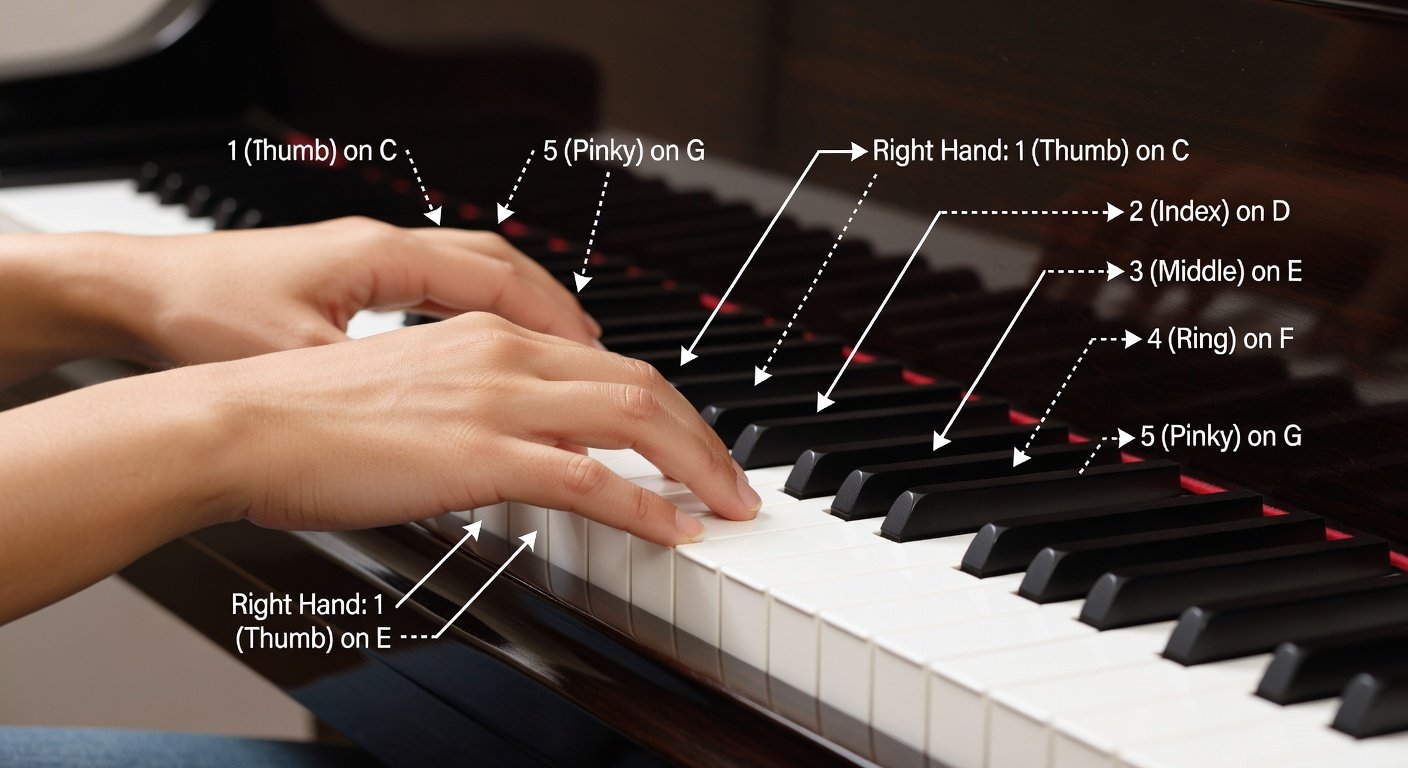
Begin with C major, the simplest scale using only white keys. For the right hand the standard fingering is thumb (1) on C, index (2) on D, middle (3) on E, thumb (1) tucked under on F, index (2) on G, middle (3) on A, ring (4) on B, and pinky (5) on C. The left hand starts with pinky (5) on C and ascends 5-4-3-2-1-3-2-1. Practice ascending and descending four times at a slow tempo before increasing speed.
G major introduces one sharp (F#). Right-hand fingering remains similar but shifts the thumb tuck to accommodate the black key: 1-2-3-1-2-3-4-5 starting on G. Pay attention to the F# played with the ring finger in the right hand. Left hand mirrors with appropriate adjustments for the sharp.
D major adds a second sharp (C#). The pattern continues with consistent thumb-under motion. A common mistake is rushing the thumb tuck, which creates uneven rhythm. Slow practice with a metronome at 60 beats per minute corrects this. Always keep wrists relaxed and fingers curved naturally over the keys.
Exploring Minor Scales in Depth
Minor scales introduce emotional variety. Start with A minor, the relative minor of C major, using identical notes but beginning on A. Natural minor follows the same fingerings as its relative major. To add color, practice the harmonic minor version by raising the seventh note (G# in A minor). This creates a distinctive leading tone used in countless melodies. Try E minor next, which shares the key signature of one sharp with G major. Compare the sound of major versus minor versions of the same starting note to train your ear. Incorporate these scales into simple melodies to internalize their character.
Arpeggios: Breaking Chords into Fluid Patterns
Arpeggios take triad chords and play their notes in succession rather than simultaneously. For C major arpeggio the right hand uses 1-2-3-5 (C-E-G-C). Extend to two octaves once comfortable. G major arpeggio follows 1-2-3-5 starting on G with F# included. D major requires attention to both sharps. Minor arpeggios replace the major third with a minor third, producing a darker tone. Practice blocked (all notes together) then broken (sequential) versions. This builds hand span and prepares players for more advanced repertoire like Bach inventions or contemporary ballads.
Daily Practice Routines for Consistent Progress
A sustainable routine prevents burnout while delivering results. Dedicate the first five minutes to gentle warm-ups such as five-finger patterns in C major. Spend ten minutes on G and D majors, alternating hands together after separate practice. Allocate fifteen minutes to minor scales and arpeggios, focusing on one new key each week. Finish with five minutes of relaxed playing without a metronome to reinforce musical flow. Track progress in a journal noting tempo achieved and any tension spots. Increase metronome speed by two beats per minute only after clean execution at the current tempo. Over four weeks this builds from 60 BPM to 80 BPM or higher with control.
Avoiding Tension While Playing
Physical tension is the primary obstacle for beginners. Maintain level wrists, relaxed shoulders, and a straight but not rigid back. Sit at a height where forearms are parallel to the floor. If shoulders rise or fingers stiffen, pause immediately and perform wrist circles or arm shakes. A useful exercise is playing scales with exaggerated slow lifts between notes to train independent finger action without arm weight. Breathing evenly while practicing also reduces overall body tension. Many players notice improvement within two weeks of mindful posture checks.
Step-by-Step Exercises and Common Patterns
- Play each scale ascending and descending four times at a comfortable tempo.
- Practice in contrary motion, where hands move in opposite directions from the same starting note.
- Combine scale and arpeggio in one continuous phrase for musical context.
- Transpose simple chord songs by applying scale knowledge to change keys.
- Record short sessions weekly to hear improvements in evenness and tone.
These patterns appear in real music; for instance, the opening of many classical pieces relies on scale fragments while arpeggios underpin harmonic movement in popular songs.
Common Mistakes and How to Avoid Them
Beginners often play too fast, sacrifice accuracy for speed, or ignore fingerings. Another frequent error is neglecting the left hand. Balance practice time equally. Avoid locking elbows close to the body; allow natural movement. If notes sound choppy, lighten touch and focus on legato connection between fingers.
Integrating Scales with Chord-Based Songs
Once scales feel familiar, apply them to favorite pieces. Take a simple chord song and insert scale runs between chord changes. This adds professional polish and demonstrates the practical value of daily scale work. For example, a C-G-Am-F progression can be enhanced with C major scale passages leading into each new chord.
FAQ: Troubleshooting for Beginners
How do I remember fingerings across multiple keys?
Associate each key with a short mnemonic phrase and recite it during practice. Consistent repetition over fourteen days typically locks in the patterns.
What should I do if my hands tire quickly?
Shorten sessions and emphasize relaxation. Build stamina gradually rather than pushing through discomfort.
Are there recommended resources for audio examples?
Yes, trusted sites such as musictheory.net and Wikipedia scale articles offer clear demonstrations and further reading.
How long before I see noticeable improvement?
Most dedicated beginners report smoother playing and better coordination within three to four weeks of daily focused practice.
Conclusion
Scales and arpeggios transform basic chord knowledge into versatile musicianship. By following the fingerings, routines, and tension-avoidance strategies outlined here, beginners develop the technical foundation required for enjoyable, lifelong piano playing. Stay patient, practice mindfully, and explore additional guidance at Wikipedia arpeggio resources. Consistent effort in 2026 will yield rewarding musical results.

No comments yet. Be the first!