 Instrumentiverse

Introduction: Why Consistent Practice Matters for Beginners
Building a music practice habit in 2026 starts with understanding that consistency beats intensity for beginners learning guitar or piano. Short, regular sessions lead to better skill retention and enjoyment than sporadic long practices. This guide provides actionable steps drawn from beginner music tutorials to help you blend both instruments without feeling overwhelmed. Many new learners quit within the first few months because they attempt marathon sessions or follow rigid schedules that ignore personal energy levels. Instead, focus on creating routines that fit your lifestyle, incorporate variety between guitar and piano, and emphasize sustainable progress over perfection.
Designing Your Personalized Routine
Start by assessing your schedule and goals. Aim for 15-30 minutes daily, mixing guitar strumming with piano scales for variety. Set weekly goals like mastering one chord progression or scale pattern. Incorporate rest days to avoid burnout while maintaining momentum. Consider your current skill level—absolute beginners should prioritize posture and basic coordination before diving into complex pieces. Track your energy patterns for a week to determine optimal practice windows. For example, if you feel mentally sharp after work, schedule technique drills then, and save creative play for weekends. Personalization also means choosing practice environments that reduce distractions, such as a quiet corner with good lighting and easy access to your instruments.
Sample 20-Minute Practice Sessions
For guitar: Spend 5 minutes on warm-up finger exercises like chromatic runs up the fretboard, 10 minutes on basic strumming patterns with a metronome starting at 60 BPM and gradually increasing, and 5 minutes playing along to a simple song such as "Horse with No Name" using only two chords. For piano: Dedicate 5 minutes to hand positioning and C major scale in both hands separately, 10 minutes on G major and D major scales with proper fingerings, and 5 minutes on a beginner melody like "Ode to Joy" to apply what you learned. These examples promote balanced technique and fun play-alongs. To add depth, alternate between hands or incorporate dynamics on piano, while guitarists can experiment with palm muting during strumming. Repeat these sessions four to five times per week, adjusting difficulty as comfort grows. Over time, extend one section by five minutes when progress feels steady.
Morning vs Evening Practice: Finding Your Best Time
Morning sessions often boost focus and energy for technique drills because cortisol levels are higher, helping with concentration on scales and finger independence. Evening practice suits creative play-alongs after a long day when stress relief is needed, allowing freer expression without performance pressure. Experiment for one week with each to see which aligns with your natural rhythm and leads to higher retention. Morning practitioners report better consistency because the session is completed before daily obligations interfere. Evening players benefit from winding down but must guard against fatigue that reduces quality. Hybrid approaches, such as five-minute warm-ups in the morning and a longer session at night, can also work well for busy schedules.
Habit-Tracking Methods That Work
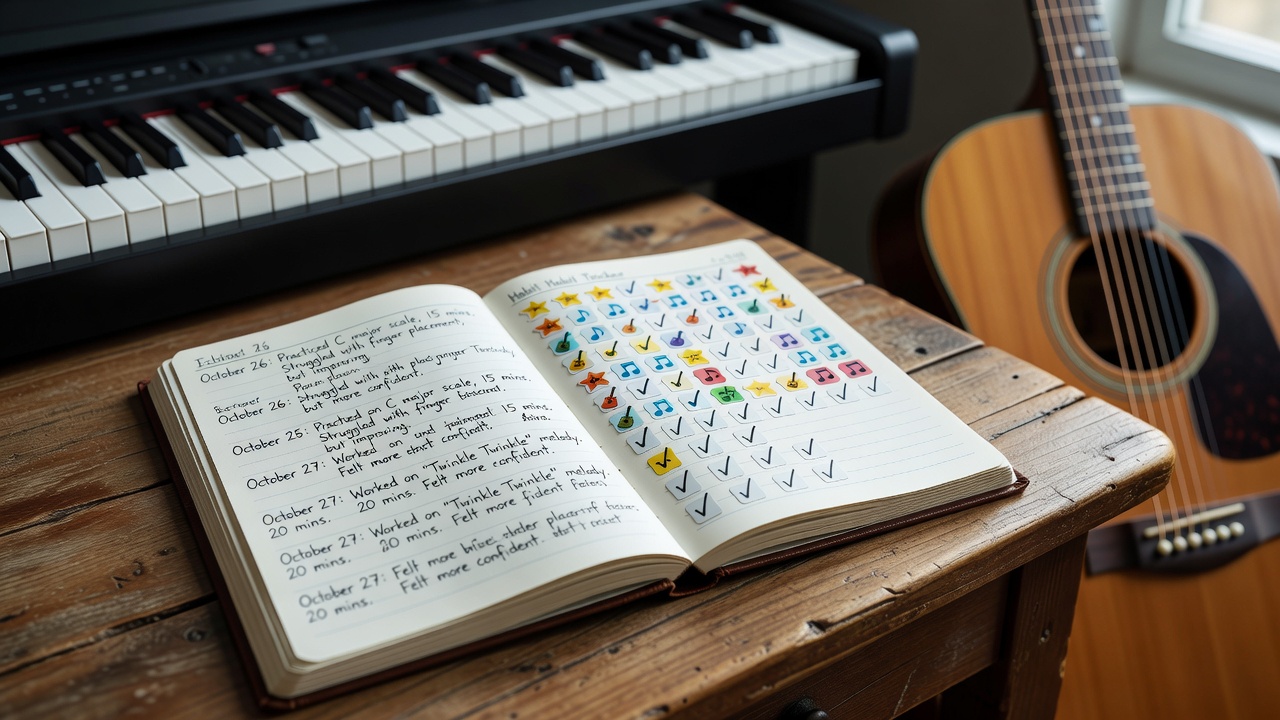
Use a simple journal or free apps to log sessions, noting what felt good and what needs work. Track streaks to build motivation. Review progress weekly to adjust goals based on real improvements. Effective methods include bullet journaling with checkboxes for each instrument, digital spreadsheets that calculate weekly averages, or voice memos summarizing daily wins. For instance, note the exact BPM achieved on a strumming pattern or how many times a scale was played without errors. Combine quantitative tracking with qualitative reflections, such as rating enjoyment on a 1-10 scale. This data reveals patterns, like whether skipping weekends affects Monday motivation, allowing you to refine your routine proactively.
Overcoming Common Motivation Dips
When enthusiasm wanes, switch instruments mid-week or play favorite songs instead of drills. Remember that missing a day is normal—focus on returning quickly rather than perfection. Common dips occur around week three when initial novelty fades and plateaus appear. Combat this by setting micro-goals, such as learning one new chord voicing or a short riff from a tutorial. Listen to recordings of musicians you admire for inspiration, or join a local beginner group for social accountability. If burnout threatens, reduce session length temporarily rather than stopping entirely. Revisit your original reasons for starting music lessons to reconnect with intrinsic motivation.
Balancing Technique Drills with Fun Play-Alongs
Limit drills to half your session time. The rest should include enjoyable activities like learning riffs or chords from songs you love. This mix keeps practice sustainable and supports long-term retention. Technique work builds the foundation—think finger strength on guitar or scale fluency on piano—while play-alongs develop musicality and ear training. For example, after drilling G major scale, immediately apply it by playing a simple folk tune that uses those notes. Rotate play-along sources between backing tracks, YouTube tutorials, and sheet music apps. This balance prevents the mechanical feel of pure exercises and reinforces why you practice in the first place.
Practical Steps for Long-Term Success
- Choose a dedicated practice space free from distractions and keep instruments visible to serve as visual cues.
- Start with free beginner tutorials on platforms like Berklee to supplement your routine with structured lessons.
- Join online communities for accountability and share weekly progress videos to stay motivated.
- Reassess every 30 days and celebrate small wins, such as completing a full song without stopping.
- Invest in basic accessories like a metronome app or comfortable stool only after establishing the habit, not before.
- Pair practice with another daily habit, such as after morning coffee or before evening reading, to anchor it in your routine.
Setting Realistic Weekly Goals
Break larger ambitions into weekly targets that feel achievable. A beginner might aim to memorize three open guitar chords one week and apply them to a two-chord song the next. On piano, focus on playing two scales hands-together by Friday. Document these goals at the start of each week and rate completion on Sunday. Adjust based on actual time available rather than ideal scenarios. This approach builds confidence through visible milestones while preventing the discouragement that comes from overly ambitious targets.
FAQ
How do I practice with limited time?
Even 10-minute focused sessions count. Prioritize one skill per day and use commute time for mental rehearsal of scales or strumming patterns. Break sessions into micro-blocks: three minutes of warm-up, four minutes of drills, and three minutes of play. Consistency in short bursts compounds faster than occasional longer efforts.
How should I measure progress?
Record short clips weekly and compare them. Note speed, accuracy, and comfort level rather than relying solely on time spent practicing. Use objective markers such as the highest clean BPM achieved or the number of songs you can play from memory. Periodic self-assessments every two weeks help quantify improvement beyond subjective feelings.
Can I learn both guitar and piano effectively?
Yes, alternating days or splitting sessions prevents fatigue while building complementary skills across both instruments. Many beginners find that piano improves music theory understanding, which then accelerates guitar progress. Start with 10 minutes per instrument on the same day if energy allows, or dedicate full days to one instrument for deeper focus.
Conclusion
Consistency in 2026 comes from personalized routines, smart tracking, and balancing work with play. Follow these beginner music practice tips to create a habit that lasts and brings lasting musical joy. Resources from NAMM and National Endowment for the Arts can further support your journey by offering additional guidance and community connections.


No comments yet. Be the first!