 Instrumentiverse
Introduction to Songwriting for Absolute Beginners
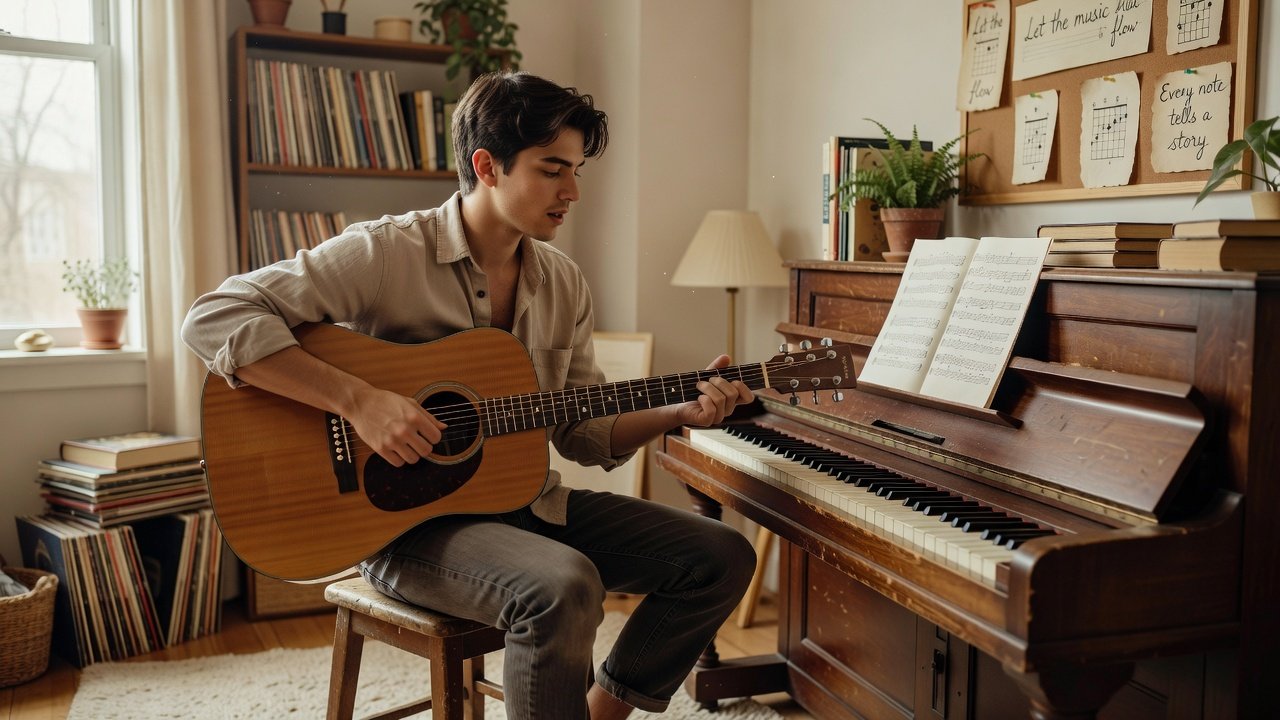
Creating your first original song is an exciting milestone for any musician. In 2026, beginners have more accessible tools than ever to start composing on guitar or piano. This guide walks you through foundational techniques, helping you move from simple chords to full verses and choruses. Whether you prefer the strumming patterns of guitar or the melodic flow of piano, these methods build confidence quickly. Many new creators wonder where to begin, and the key is starting small with familiar elements like basic major and minor chords. This approach reduces overwhelm and lets creativity flow naturally. By the end of this article, you will have concrete exercises, multiple examples, and worksheets to try immediately, turning your ideas into complete short songs.
The process emphasizes patience and repetition. Songwriting is a skill that improves with consistent practice rather than waiting for perfect inspiration. Beginners often succeed by focusing on emotion and simplicity instead of complex theory right away. This article covers everything from selecting your first instrument to refining a finished piece, ensuring you feel equipped to create music that feels personal and satisfying.
Guitar vs Piano: Choosing Your Starting Point and Comparing Approaches
Both instruments offer unique advantages for beginners. Guitar excels at rhythmic strumming and portable practice, while piano provides visual clarity for chords and melodies. Compare the two: guitar learners often master open chords like G, C, and D within weeks, whereas piano players benefit from seeing note relationships on the keys at a glance. Guitar is great for campfire-style songs and quick chord changes, but piano allows easier layering of multiple notes simultaneously for richer harmonies.
Many successful songwriters blend both instruments over time. Start with one to build core skills before experimenting with the other. For instance, play a guitar progression and then replicate it on piano to understand voicing differences. Consider your lifestyle too: if you travel often, an acoustic guitar might suit daily practice better than a full piano. Ultimately, enjoyment matters most because consistent play leads to faster progress regardless of the instrument chosen.
Foundational Music Theory Every Beginner Needs
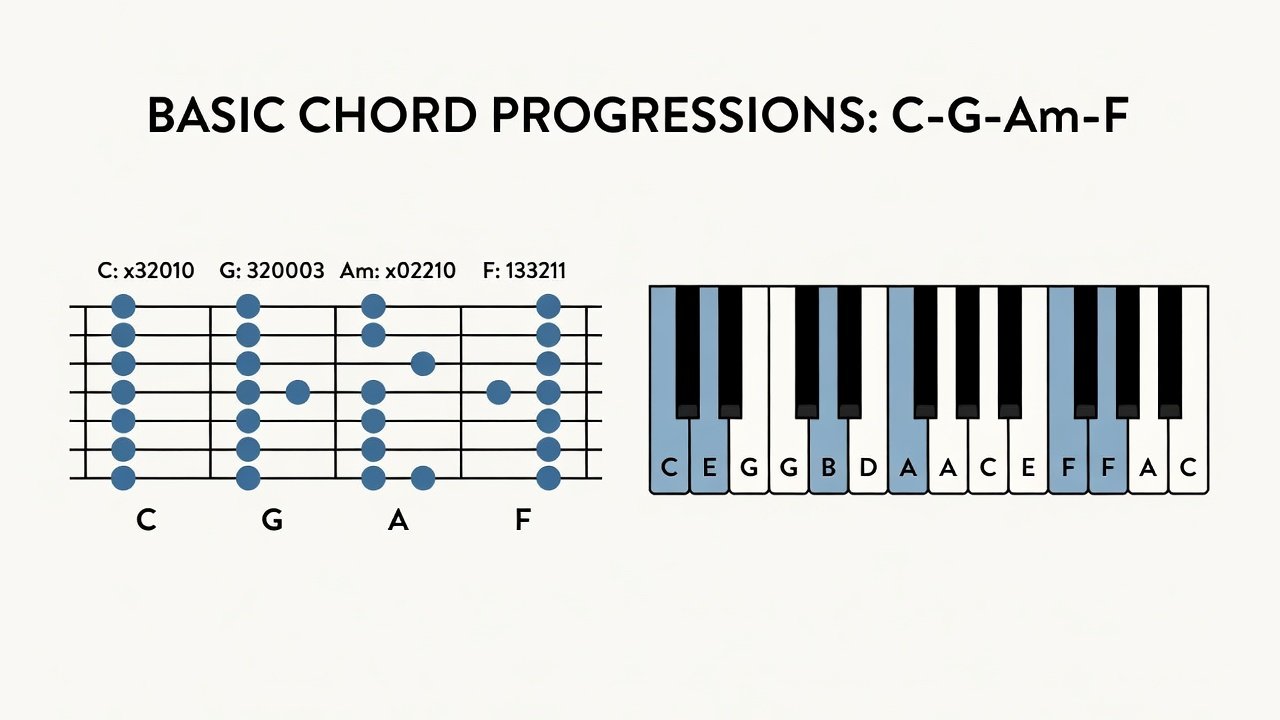
Understanding basic theory accelerates composition without requiring years of study. Focus on the C major scale first, as it uses only white keys on piano and simple shapes on guitar. Learn that major chords sound happy and minor chords add emotion. MusicTheory.net offers free interactive lessons to reinforce these concepts at your own pace. Next, explore common progressions such as I-V-vi-IV. On piano, this translates to C-G-Am-F. Practice switching smoothly between these chords until the changes feel automatic.
Expand your knowledge by learning the relative minor key, which shares the same notes but starts on A for a different mood. Experiment with adding a seventh chord like Cmaj7 for extra color. This foundation supports endless creativity while keeping things accessible for absolute beginners.
Step-by-Step: Building Your First Chord Progression
Follow this detailed exercise to create a progression in under 30 minutes. First, select a key like C major. Second, choose four chords from the scale such as C, G, Am, and F. Third, play them in a repeating loop for two minutes straight while tapping your foot to maintain steady tempo. Record yourself on a phone to hear what works and identify spots needing smoother transitions.
Refine by changing the order or adding rhythmic variations like holding one chord longer. This method forms the backbone of countless hits and beginner tracks alike. Try the same progression in a new key like G major to build versatility across the fretboard or keyboard.
Creating Basic Song Structure with Verses and Choruses
A simple song structure includes an intro, verse, chorus, verse, chorus, and outro. The verse tells the story with varied lyrics, while the chorus delivers the emotional hook using the same melody and chords. Aim for 8-16 bars per section initially to keep ideas manageable. Write your chorus first around the strongest part of your progression, then build verses that lead naturally into it. Add a short bridge for contrast before the final chorus to heighten impact.
Developing Simple Melodies on Guitar and Piano
Melody creation starts with humming or singing over your chords. On piano, play single notes from the scale in the right hand while holding chords left. Guitarists can pick individual strings or use hammer-ons for expression and dynamics. Experiment with repetition and variation, such as repeating a short phrase then altering the ending note. Sing the melody back to check if it feels memorable and record ideas on your phone to capture fleeting inspiration before it disappears.
Blending Guitar Strumming with Piano Chords
Once comfortable on one instrument, layer both for richer sound. Play piano chords as the foundation and add guitar strumming on the off-beats. This creates texture without complexity. Practice syncing rhythms slowly, focusing on consistent tempo using a metronome app. Start with simple downstrokes on guitar while sustaining piano notes, then gradually introduce more intricate patterns as coordination improves.
Practical Worksheets and Daily Exercises
- Day 1: Master one progression in two keys and play it for five minutes without stopping.
- Day 2: Write lyrics for one verse over the progression, focusing on personal experiences.
- Day 3: Develop a chorus melody and record a 60-second demo to review later.
- Day 4: Refine structure, add a simple bridge, and practice playing the full song end to end.
- Day 5: Experiment with blending guitar and piano on the same progression.
Repeat these prompts weekly. Track progress in a notebook to spot patterns in your writing style and celebrate small wins.
Examples of Short Beginner Songs
Consider a song using C-G-Am-F with lyrics about daily life. The verse might describe waking up and facing the day, while the chorus repeats a simple phrase like “finding my way home.” Another example pairs Em-C-G-D for a reflective tone, with verses exploring memories and a chorus emphasizing hope. Adapt these templates to your own words and melodies, changing one chord if needed to better match your vocal range or emotional intent.
Common Mistakes to Avoid When Starting Out
Many beginners rush into complex chords too soon or ignore consistent rhythm. Another pitfall is overthinking lyrics instead of letting them flow from the melody. Focus on completing short songs rather than perfecting every detail. Record early drafts to notice timing issues that are hard to hear while playing. Avoid comparing your first attempts to professional recordings, as growth comes from volume of practice.
FAQ: Overcoming Common Creative Hurdles
How do I beat writer’s block?
Change your environment or limit yourself to one chord for five minutes. Constraints often spark ideas. Try freewriting lyrics without judgment or playing along with a simple drum loop for fresh energy.
Should I learn theory before composing?
No. Start composing immediately and learn theory as needed through Berklee resources. Practical application teaches faster than theory alone and keeps the process fun.
Is it better to write on guitar or piano first?
Choose the instrument you enjoy most. Many switch between both for variety and discover new ideas from the different physical approaches.
What if my melody feels boring?
Add small variations like changing one note or extending a phrase by a beat. Listen to simple folk songs for inspiration on how repetition with slight changes creates catchiness.
Conclusion
Composing simple songs on guitar and piano is achievable for any beginner in 2026. By mastering basic progressions, structuring verses and choruses, and practicing daily exercises, you will build a portfolio of original music. Remember to record everything and refine over time. Start today with the prompts above and watch your creativity grow into satisfying, personal compositions that you can share or simply enjoy privately.
No comments yet. Be the first!