 Instrumentiverse

10 Actionable Guitar Practice Tips for Absolute Beginners in 2026
Starting guitar in 2026? You're in luck—free apps and online tools make learning easier than ever. This listicle shares 10 practical tips tailored for total newbies. Each includes step-by-step guidance, common pitfalls, and progress-tracking methods. Stick to these, and you'll build skills and confidence fast. No fancy gear needed—just your guitar, 20 minutes daily, and consistency.
Whether you're self-taught or following tutorials, focus on fundamentals like posture, exercises, and routines. By month's end, you'll strum basic songs smoothly.
Tip 1: Master Proper Posture and Guitar Hold
Bad posture leads to pain and sloppy playing. Sit or stand straight to build good habits.
- Sit on a sturdy chair, feet flat. Rest guitar on right thigh (lefties reverse).
- Hold neck at 45-degree angle; thumb behind neck, fingers curved.
- Keep shoulders relaxed, wrist straight—not bent.
Pitfalls to avoid: Slouching or gripping too tight causes cramps. Practice in front of a mirror.
Track progress: Film yourself weekly. Note improvements in comfort.
Tip 2: Build a Daily 20-Minute Practice Routine
Consistency beats marathon sessions. Short, focused practice wires your brain.
- Warm-up: 2 mins finger stretches.
- Technique: 10 mins on chords/exercises.
- Songs: 5 mins simple strumming.
- Review: 3 mins note what worked.
Pitfalls: Skipping days—use phone reminders. Don't rush; quality over quantity.
Track: Habit app like Streaks; mark daily check-ins.
Tip 3: Daily Finger Independence Exercises
Strong, independent fingers unlock chords. Start slow.
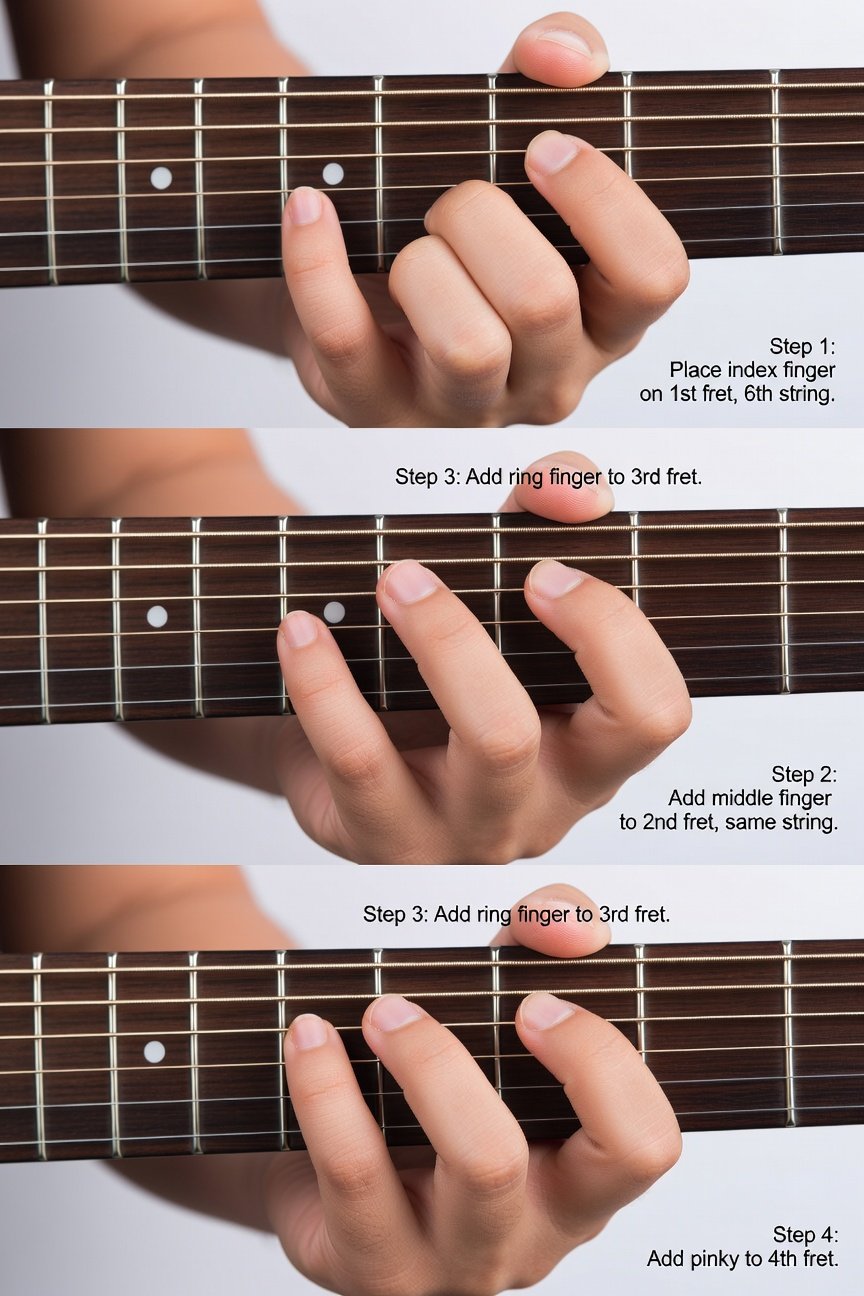
- "Spider exercise": Index on 5th fret low E, pinky on 8th; crawl up/down strings.
- 1-2-3-4 per string: Press frets sequentially, 30 secs each.
- Chromatic scale: All frets 1-4, repeat 5x.
Pitfalls: Muting strings—press firmly, minimize finger lift.
Track: Time how long before buzz-free; aim to double speed monthly.
Tip 4: Tune with Free Apps Like GuitarTuna
Out-of-tune guitar sounds awful. Apps make it effortless.
- Download GuitarTuna (free tier).
- Pluck open strings; follow visual tuner.
- Tune EADGBE standard; do before every session.
Pitfalls: Relying on ear early—apps are accurate for beginners.
Track: Note tuning time; under 1 min = mastery.
Pro resource: Check free lessons at JustinGuitar.
Tip 5: Learn 4 Essential Open Chords First
Em, Am, G, C get you playing songs Day 1.
- Practice transitions: Em to Am (10x slow).
- Strum once per chord, hold 4 beats.
- Speed up gradually.
Pitfalls: Barre too soon; master open first.
Track: Record chord changes; count error-free reps.
Tip 6: Simple Strumming Patterns
Downstrokes build rhythm feel.
- Down-down-up, repeat on 4 beats.
- Metronome at 60 BPM (free app).
- Combine with chords.
Pitfalls: Tense wrist—relax, use forearm.
Track: Increase BPM weekly; log sessions.
Tip 7: Use Free Apps for Guided Lessons
2026 apps like Yousician gamify learning.
- Download Yousician free version.
- Follow beginner paths: Chords, songs.
- Practice with on-screen feedback.
Pitfalls: Ignoring feedback—slow down on misses.
Track: App streaks and stars earned.
Explore more at Yousician.
Tip 8: Incorporate Metronome for Timing
Perfect timing separates players.
- Free metronome app (e.g., Pro Metronome).
- Start 60 BPM, downstrokes on beats.
- Gradually up to 80 BPM.
Pitfalls: Rushing—feel the click first.
Track: BPM log in notebook.
Tip 9: Record and Review Your Playing
Self-critique accelerates growth.
- Use phone voice memo.
- Play a song chunk; listen back.
- Note buzzes, timing issues; fix next day.
Pitfalls: Skipping review—it's key.
Track: Weekly recordings folder; compare.
Tip 10: Journal Progress and Set Micro-Goals
Track wins to stay motivated.
- Notebook: Date, what practiced, challenges overcome.
- Weekly goal: e.g., "Nail G-Em transition."
- Celebrate: New pick after 7 days.
Pitfalls: Vague goals—be specific.
Track: Review journal monthly for patterns.
Bonus: Official tuning guide from Fender.
Sample 20-Minute Daily Practice Schedule
Incorporate all tips:
- 0-2 mins: Posture check + tune (Tips 1,4).
- 2-7 mins: Finger exercises (Tip 3).
- 7-12 mins: Chords + strumming with metronome (Tips 5,6,8).
- 12-17 mins: App lesson or song (Tip 7).
- 17-20 mins: Record, journal (Tips 9,10).
Commit daily. In weeks, you'll play favorites like "Wonderwall." Adjust as needed, stay patient—rock on!


No comments yet. Be the first!