 Instrumentiverse

Introduction: The Evolution of a Modern Music Icon
Taylor Swift has become one of the most influential figures in contemporary music. Her trajectory from a teenage country songwriter to a global pop powerhouse offers a compelling case study in artistic growth, business acumen, and fan connection. This in-depth profile examines her early beginnings, genre shifts, creative processes, and lasting industry impact through specific album examples, milestone comparisons, and practical career lessons that aspiring musicians can apply today.
Swift's story is not just about hits but about strategic reinvention. From selling millions of records in the country genre to dominating pop charts and reclaiming her masters, she demonstrates how persistence and adaptability drive long-term success in the music industry.
Early Country Beginnings and Breakthrough
Born in 1989 in Pennsylvania, Swift moved to Nashville at age 14 to pursue country music. Her self-titled debut album in 2006 showcased storytelling rooted in personal experiences, earning her early acclaim with tracks like "Tim McGraw" and "Teardrops on My Guitar." By her second album, Fearless (2008), she achieved mainstream crossover success with singles such as "Love Story" and "You Belong with Me," blending country instrumentation with pop sensibilities that broadened her appeal.
Milestone Comparisons: From Local Talent to Global Star
Swift's early career milestones include winning her first Grammy for Album of the Year with Fearless in 2010, making her the youngest recipient at the time. Comparisons with peers like Carrie Underwood highlight her rapid ascent through authentic songwriting rather than manufactured personas. While Underwood focused on powerful vocals in traditional country, Swift emphasized narrative depth, leading to higher crossover sales and critical recognition.
Her third album, Speak Now (2010), was entirely self-written, a rare feat that underscored her songwriting prowess and set her apart from many contemporaries who relied heavily on co-writers from the start.
Genre Transitions: From Country to Pop Dominance
The shift began with Red (2012), incorporating rock and electronic elements on tracks like "We Are Never Ever Getting Back Together" and the title track featuring guitar-driven emotion. This was followed by the full pop pivot on 1989 (2014), which abandoned country twang for synth-driven tracks like "Shake It Off" and "Blank Space," selling over 10 million copies worldwide. Reputation (2017) embraced darker, trap-influenced production with songs exploring media scrutiny, while Lover (2019) returned to brighter pop sounds emphasizing love and politics.
Folklore and Evermore (2020) introduced indie-folk introspection during the pandemic, featuring stripped-back arrangements and fictional storytelling. These transitions demonstrate Swift's willingness to experiment while maintaining narrative-driven lyrics. Each album reflects evolving personal themes, from heartbreak to empowerment, and serves as a blueprint for artists considering genre changes: test new sounds incrementally before a full pivot.
Songwriting Process and Creative Techniques
Swift is renowned for her diary-like approach, often writing alone or with close collaborators like Jack Antonoff or Aaron Dessner. She has described starting with titles or emotional hooks before building melodies on guitar or piano. In interviews, she emphasizes vulnerability, drawing from real-life events while protecting privacy through fictionalized details.
Practical steps derived from her process include maintaining a daily journal for lyric ideas, experimenting with genre-specific production early in demos, and iterating on verses until the emotional core resonates. For example, on Red she revisited personal relationships across multiple songs to create thematic cohesion. On folklore, she adopted character perspectives to expand her range beyond autobiography.
- Start with personal journals for raw material and refine into universal themes
- Experiment with multiple genres per project to avoid creative stagnation
- Iterate on demos until emotional resonance peaks, often rewriting choruses several times
- Collaborate selectively to enhance rather than dilute your voice
Lessons from her process include prioritizing authenticity over trends, a strategy that has sustained her relevance across decades and multiple industry shifts.
Cultural Impact and Key Stats
Swift's influence extends beyond charts into social conversations around artist ownership, mental health, and fan culture. Key stats include over 200 million records sold and multiple Billboard records for album debuts. Her Eras Tour became a cultural phenomenon, boosting local economies in host cities through tourism and merchandise.
Comparisons to legacy artists like Madonna show Swift achieving similar reinvention but at a faster pace thanks to digital platforms. Her work has inspired discussions on songwriting as literature, with universities analyzing her lyrics in courses.
Grammy Awards official site recognizes her as one of the most awarded artists in history, with 14 wins including Album of the Year three times.
Fan Engagement Strategies
Swift excels at direct fan interaction through social media posts, secret album listening sessions, and personalized messages during tours. Her use of Easter eggs in music videos, album artwork, and social media creates community excitement and speculation. This approach has built a loyal base that defends her publicly, drives streaming numbers, and participates in fan-led campaigns like those supporting her re-recordings.
Practical takeaway: consistent, genuine communication fosters loyalty that translates into sustained commercial success even during career transitions.
Business Moves: The Re-Recording Projects
In 2019, Swift announced plans to re-record her early catalog after a dispute over master rights. Beginning with Fearless (Taylor's Version) in 2021, these releases include new vault tracks and updated production values. The strategy reclaims ownership and refreshes fan interest, with later versions often charting higher than originals due to added content and fan support. This sets a precedent for artists facing similar contract issues, encouraging negotiations for master ownership clauses in future deals.
Billboard has covered how these versions frequently outperform originals on global charts, highlighting the financial and artistic benefits of such moves.
Industry Influence and Career Lessons
Swift's advocacy for fair compensation and against streaming inequities has influenced policy discussions in the music business. Her move to Universal Music Group emphasized ownership clauses that benefit artists long-term. Key lessons include diversifying revenue through tours, merchandise, and now masters control, as well as using public platforms to advocate for industry reforms.
Artists can apply these by documenting their creative contributions early and building direct audience relationships independent of labels.
Conclusion
Taylor Swift's career illustrates the power of adaptability, storytelling, and strategic business decisions. Aspiring musicians can learn from her commitment to evolution while staying true to core artistic values, turning challenges into opportunities for greater control and impact.
FAQ
Does Taylor Swift play guitar?
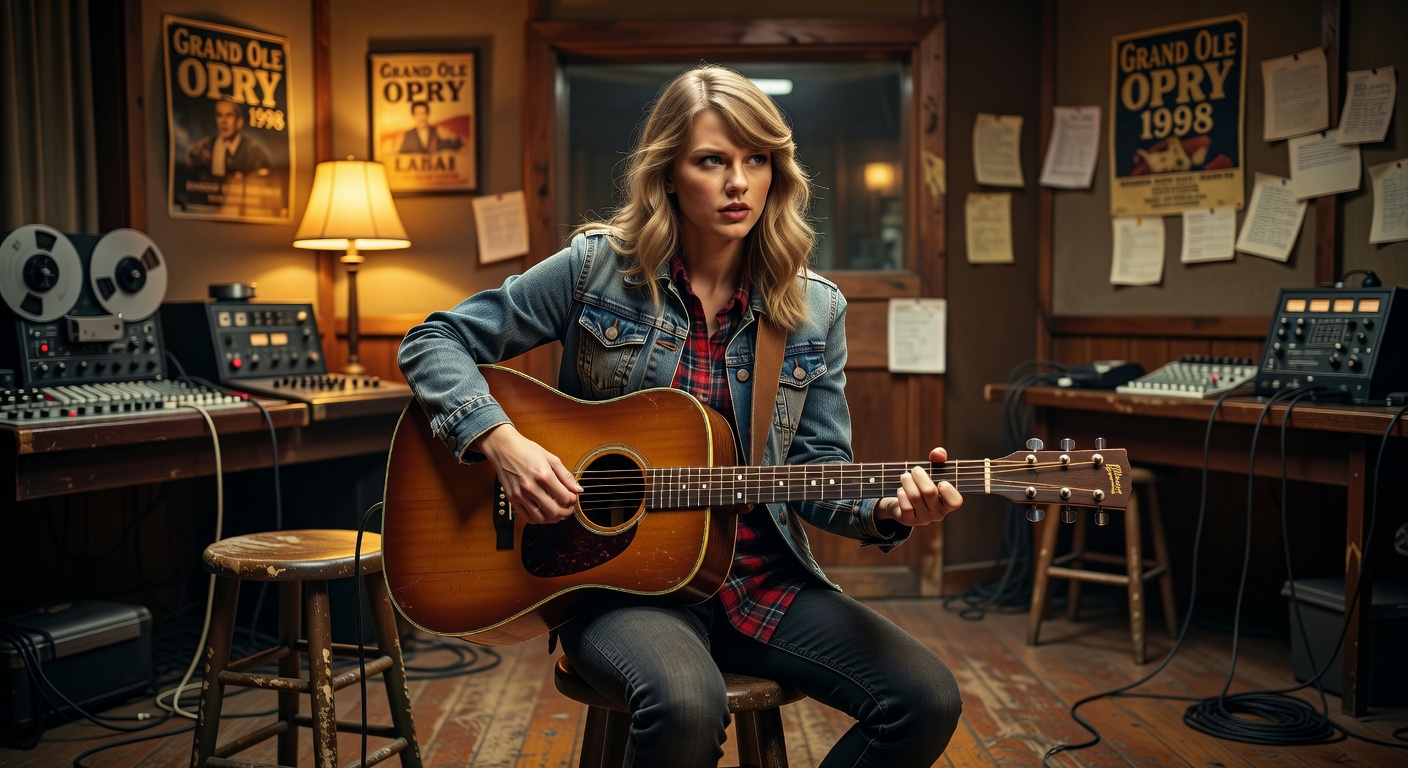
Yes, Swift is proficient on acoustic guitar and often performs with it live and in studio sessions. She started learning as a child and credits it with shaping her early songwriting style, frequently using it to develop melodies before adding full production layers.
How involved is Taylor Swift in production?
She takes an active role in production decisions across her albums, co-producing many tracks and collaborating closely with engineers and producers to realize her sonic vision. Her involvement has increased over time, particularly on self-directed projects like folklore where she shaped the intimate sound from the ground up.
No comments yet. Be the first!