 Instrumentiverse
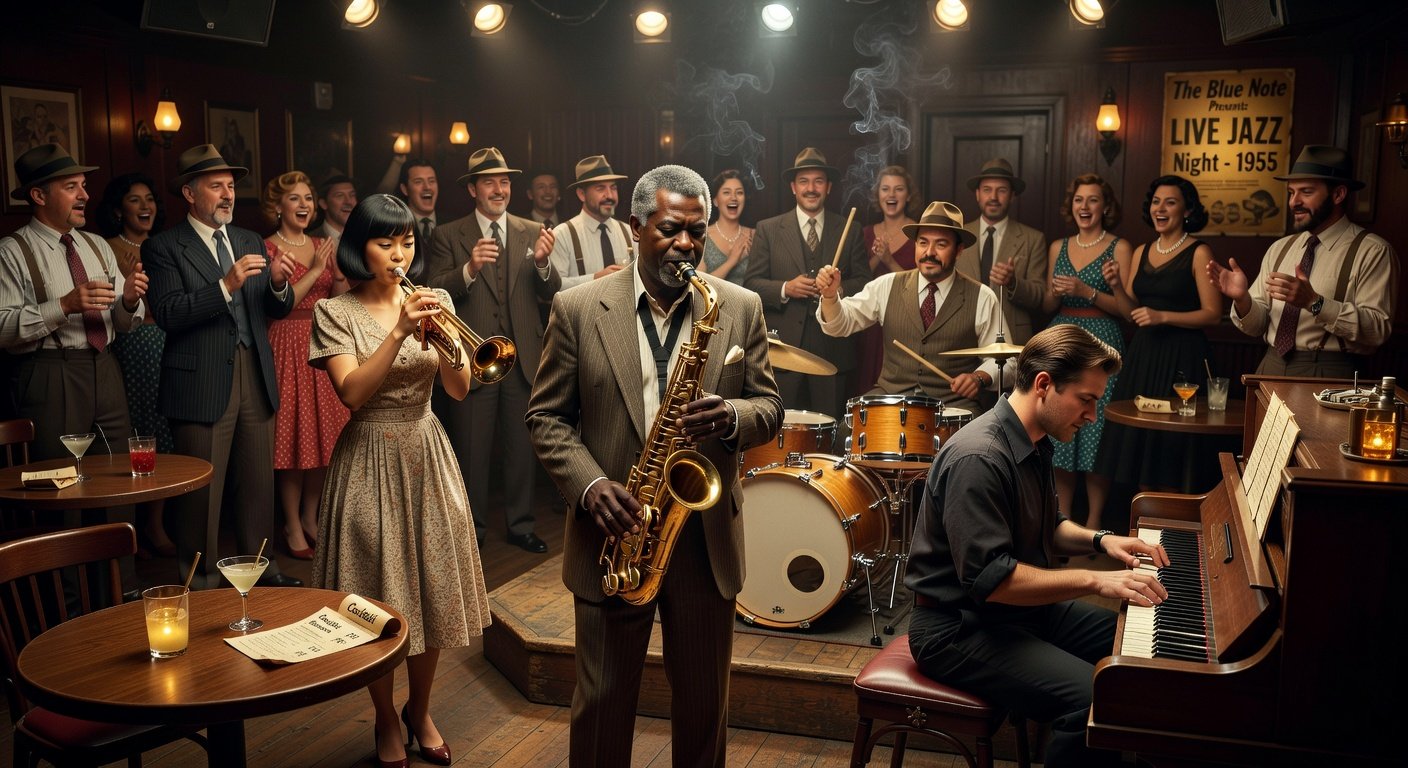
Jazz is the heartbeat of American music, a genre born in the early 20th century that pulses with creativity, rhythm, and soul. From the smoky clubs of New Orleans to global stages, its improvisational spirit continues to inspire. If you're new to jazz or looking to deepen your appreciation, this curated list of 10 must-hear tracks from legendary artists will build your foundational playlist. We'll break down core elements like improvisation and swing, explore each track's historical significance, and highlight their sway on 2026 music fusions blending jazz with electronic beats and hip-hop flows.
Jazz Fundamentals: Improvisation and Swing Explained
For beginners, jazz can feel chaotic at first—but that's its magic. Improvisation is the art of spontaneous composition, where musicians riff off the melody, harmony, and rhythm in real-time. Unlike scripted pop songs, jazz solos let artists express raw emotion, turning each performance into a unique story. Listen for how saxophonists like John Coltrane bend notes or pianists like Thelonious Monk play angular phrases that surprise and delight.
Swing is the rhythmic groove that makes jazz danceable. It's that infectious 'in-the-pocket' feel where eighth notes aren't played evenly but with a long-short bounce—like 'da-DUM, da-DUM.' This propels the music forward, evident in big band eras led by Duke Ellington. To grasp it, tap your foot while listening: feel the pulse lift on off-beats.
These elements form jazz's DNA, influencing everything from Kendrick Lamar's flows to electronic producers sampling vinyl cracks. Dive into the Library of Congress for deeper American music archives.
10 Must-Hear Jazz Tracks: History, Significance, and Modern Echoes
Here's your essential playlist, ordered chronologically to trace jazz's evolution. Each track showcases innovation, with notes on why it matters and its 2026 crossovers.
- Louis Armstrong - "West End Blues" (1928)
Armstrong's trumpet mastery defined hot jazz. His emotive solo and scat singing broke barriers. Significance: Pioneered soloist as star. Modern: Sampled in hip-hop by A Tribe Called Quest. - Duke Ellington - "Take the A Train" (1941)
Ellington's orchestra anthem swings with sophisticated arrangements. Significance: Big band blueprint. Modern: Remixed in electronic lounge by Bonobo. - Charlie Parker - "Ornithology" (1946)
Parker ('Bird') invented bebop's blazing speed and complex chords. Significance: Shifted jazz to virtuosic listening music. Modern: Influences Robert Glasper's hip-hop jazz. - Miles Davis - "So What" (1959)
Modal jazz pioneer from Kind of Blue. Cool, spacious modal scales. Significance: Best-selling jazz album ever. Modern: EDM drops echo its bass riff. - Dave Brubeck Quartet - "Take Five" (1959)
5/4 time signature broke norms; Paul Desmond's sax soars. Significance: Pop crossover hit. Modern: Snarky Puppy fuses it with funk. - Thelonious Monk - "'Round Midnight" (1947, iconic 1950s versions)
Monk's quirky angles and stride piano. Significance: Jazz standard. Modern: Amy Winehouse covered; electronic twists by BadBadNotGood. - John Coltrane - "Giant Steps" (1960)
Coltrane changes: rapid key shifts test virtuosity. Significance: Bebop evolution. Modern: Hiatus Kaiyote's neo-soul nods. - Bill Evans Trio - "Waltz for Debby" (1961)
Lyrical piano trio intimacy. Significance: Impressionistic harmony. Modern: Brad Mehldau bridges to hip-hop beats. - Herbie Hancock - "Cantaloupe Island" (1962)
Funky soul jazz with infectious hook. Significance: Gateway to fusion. Modern: Us3's hip-hop jazz staple. - Wayne Shorter - "Footprints" (1966)
Miles Davis Quartet modal mystery. Significance: Weather Report foundation. Modern: Kamasi Washington expands in cosmic jazz-rap.
Stream these on Spotify or YouTube—start with Kind of Blue full album for immersion.
Listening Tips to Build Your Jazz Foundation
- Active Listening: Focus on one instrument per playthrough. First: bass/drums for swing; next: horns for improv.
- Context Matters: Read liner notes or watch live footage. See Miles' cool posture or Parker's frenetic energy.
- Build Gradually: Pair classics with moderns like Jacob Collier or Makaya McCraven for fusion bridges.
- Live Vibes: Attend jam sessions; improv thrives live. Check National Endowment for the Arts for jazz grants and events.
- Playlist Flow: Sequence slow-to-fast: Evans to Coltrane for dynamic build.
Jazz's Enduring Influence on 2026 Fusions
In 2026, jazz pulses through electronic and hip-hop. Producers like Flying Lotus layer Coltrane-esque sheets over glitchy beats. Hip-hop artists such as Joey Bada$$ sample swing drums, while Kamasi Washington's epic sax drives rap-jazz hybrids. Even EDM festivals feature 'nu-jazz' sets with live improv over synths. These tracks aren't relics—they're blueprints for innovation, proving jazz's adaptability. As Smithsonian exhibits show, jazz shaped culture; today, it reshapes sound.
Start spinning these essentials. Your ears will thank you as you uncover layers of genius. What's your first jazz love? Share below!
No comments yet. Be the first!